
The control layer between your enterprise and its LLMs.
Quanta sits between your applications and your models. It controls what is sent, compresses it to cut token cost, governs every call, and shows spend and quality in real time, without changing your models or rewriting your apps.
Not a chatbot. Not an agent wrapper. The governed gateway for enterprise LLM traffic.
A control plane for every call your enterprise makes to an LLM.
Applications, agents, and copilots route through one governed gateway. You change a base URL; Quanta does the rest.
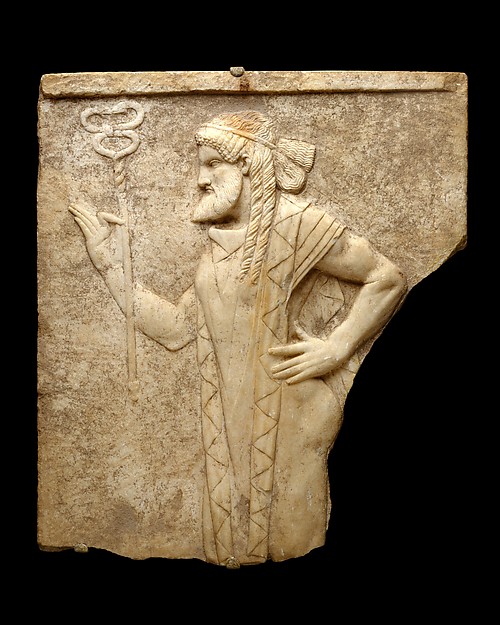
Hermes carried messages between worlds. Quanta carries yours, accountably.
Every prompt, every retrieved passage, every model response moves through one governed layer. Nothing reaches a model unseen; nothing returns unrecorded. The gateway is the messenger your enterprise can hold to account.
Six capabilities. One gateway.
Decide what reaches a model, before it does.
Quanta enforces policy on every prompt and every payload. It redacts sensitive fields, blocks data classes from leaving your environment, requires approval for defined actions, and routes requests by sensitivity. The policy lives in one model-agnostic layer instead of being scattered across application code.
Send less. Pay less. Lose nothing.
Most enterprise prompts carry far more context than the task needs. Quanta compresses context as it passes through. It summarizes history, prunes low-value retrieval, and normalizes instructions, so you pay for signal instead of bloat. Every reduction is gated by evaluation, so quality is never traded blindly.
Prove what your AI did.
Every call is authenticated through Microsoft Entra ID and written to an append-only, hash-stamped audit record that captures the actor, the policy decision, the model, and a content hash. Retention and redaction are enforced by policy, and the log is built to hand to an auditor, not to a developer.
See every call, in cost and in quality.
Quanta turns an opaque AI invoice into an itemized ledger. Every request is attributed to a workflow, team, and customer, with token count, cost, latency, and a quality signal. Spend becomes something you can forecast and defend, not something you discover at month-end.
Ship changes only when they measure better.
Cost and policy changes are tested against a held-out evaluation set before they reach production. Quanta scores a candidate against the current version on accuracy and citation correctness, item by item, so a cheaper or stricter configuration goes live only when it preserves quality.
Promote with proof. Roll back in one click.
Every configuration is versioned with a measured before-and-after. Promote a new policy or compression profile when the evaluation clears the bar, and revert instantly if production tells a different story. The entire stack can run inside your own Azure tenant.
Built for how enterprises actually use AI.
Azure OpenAI cost reduction
Cut token spend on Azure OpenAI without changing your deployments or models.

RAG context optimization
Prune and compress retrieved context so answers stay sharp and prompts stay lean.

AI agent governance
Put policy, redaction, and audit beneath autonomous agents before they scale.

Copilot Studio extension governance
Govern and observe the LLM traffic generated by Copilot Studio extensions.

LLM request observability
Trace, attribute, and replay every model call across the organization.

Sensitive data control
Stop regulated data from reaching external models, by policy, at the gateway.

Token spend forecasting
Model AI cost as a function of usage and context size, then budget for it.

Quality-preserving compression
Reduce context with an evaluation gate that protects answer quality.

Enterprise AI gateway deployment
Stand up a governed, Azure-native gateway inside your own tenant.
Enterprise-grade by architecture, not by promise.
Quanta is built to run inside your own Azure tenant and is operated by Ryshe on your behalf. Your data, your keys, your environment, with a managed team keeping the gateway tuned, governed, and improving.

Azure-native architecture
Built on Container Apps, App Service, AI Search, and Functions.
Microsoft Entra ID
Single sign-on and role-based access for the console and gateway.
Managed identity
Service-to-service auth with no secrets in configuration.
Azure Key Vault
Provider keys and secrets stored and rotated in Key Vault.
Private endpoints
Data services reachable only on your private network.
Audit logging
Append-only, hash-stamped record of every state change.
Data retention controls
Per-workflow capture, redaction, and purge policies.
Customer-owned environments
Deploy the full stack in your subscription, so data never leaves.
From the Ryshe research desk.
The Hidden Cost of AI Context Bloat
How oversized prompts and unmanaged context quietly inflate enterprise LLM spend, and what a gateway recovers
ReadWhy Enterprise AI Needs a Context Gateway
The missing control plane between enterprise applications and large language models
ReadAI FinOps Beyond Token Dashboards
From counting tokens to controlling the cost of enterprise AI
ReadGoverning Agentic Workflows Before They Scale
Why autonomous AI raises the stakes on context control and auditability
ReadThe Architecture of Secure AI Context Control
A reference architecture for an Azure-native, customer-owned AI context gateway
ReadContext Compression Without Quality Loss
Methods, measurement, and guardrails for reducing prompt context while preserving answer quality
ReadPrompt and Context Governance for Regulated Industries
Controlling what AI sees and sends in financial services, healthcare, and government
ReadThe Enterprise LLM Observability Maturity Model
Five stages from blind spend to governed, forecasted, quality-aware AI operations
ReadQuestions enterprise buyers ask.
What is an AI context gateway?
An AI context gateway is a control plane that sits between your applications and large language models. Every prompt and response passes through it, so you can enforce policy, compress context to reduce cost, govern and audit usage, and observe spend and quality. It does this from one place you own, instead of logic scattered across application code.
How does Quanta reduce Azure OpenAI and LLM costs?
Quanta compresses the context sent to models by summarizing history, pruning low-value retrieval, and normalizing prompts, and it routes simpler requests to cheaper models. Because you pay per input token, removing bloat directly lowers spend. Every reduction is gated by an evaluation step, so cost falls without degrading answer quality.
Does compression reduce answer quality?
No reduction ships unless it passes evaluation. Quanta scores each candidate configuration against a held-out benchmark and promotes it only when quality is preserved. Cost control is treated as a quality-constrained optimization, never a blind trade.
Where is my data sent? Can it run in our own Azure tenant?
Yes. Quanta is Azure-native and can be deployed entirely inside your own subscription via infrastructure-as-code, so prompts, context, and keys never leave your tenant. Identity uses Entra ID, secrets live in Key Vault, and data services sit behind private endpoints.
How is this different from an API gateway or a provider's usage dashboard?
An API gateway governs HTTP; it has no concept of prompts, context, or tokens. A provider dashboard shows spend after the fact and is bound to one vendor. Quanta is model-agnostic and acts at the context layer. It can change what is sent, enforce policy, and prove what happened, not only report it.
Does it work with AI agents and Copilot Studio?
Yes. Agents and Copilot Studio extensions point at the gateway like any other client. Because autonomous workflows multiply model calls and data reach, governing them at the context layer is where Quanta is most valuable.
What does it take to deploy?
Adoption is a configuration change, not a migration. You point your applications' model base URL at the gateway. You can start in observe-only mode to establish a baseline, then turn on policy and compression in stages, each with a measured effect.

Put a control layer in front of your AI.
Bring control, cost, governance, and observability to enterprise LLM traffic, deployed in your Azure tenant and operated by Ryshe.